If you want top ABM tactics that rise above basic tips like “align sales and marketing” or “make personalized ads,” you are in the right place.
From tracking market coverage and account penetration to applying Sam Nelson’s “Agoge” outreach model for ABM BDRs, I have discussed battle-tested moves from leading practitioners, along with how ZenABM helps you put them into play.
Read on…
Instead of guessing your TAM from a few market reports, tighten your approach from day one if you want to nail ABM:
Work with Sales to lock your Ideal Customer Profile, then calculate a practical Total Addressable Market from the bottom up.
Do not lean on lofty top-down estimates alone.
As B2B marketer Matt Heinz cautions, “Just because you can make Excel say anything doesn’t mean you’ll actually be able to generate leads from 90% of your entire market!”

In short, quantify reachable accounts and buyers who truly fit your ICP and plan around that reality.
After defining TAM, monitor market penetration by checking what proportion of those accounts you are actually engaging.
ABM teams track coverage metrics such as the percentage of targets showing engagement or pipeline.
High coverage shows your reach is effective, while low coverage reveals outreach gaps.
In practice, review how many TAM accounts have at least one engaged contact through site visits, events, or emails, then refine your approach to raise coverage.
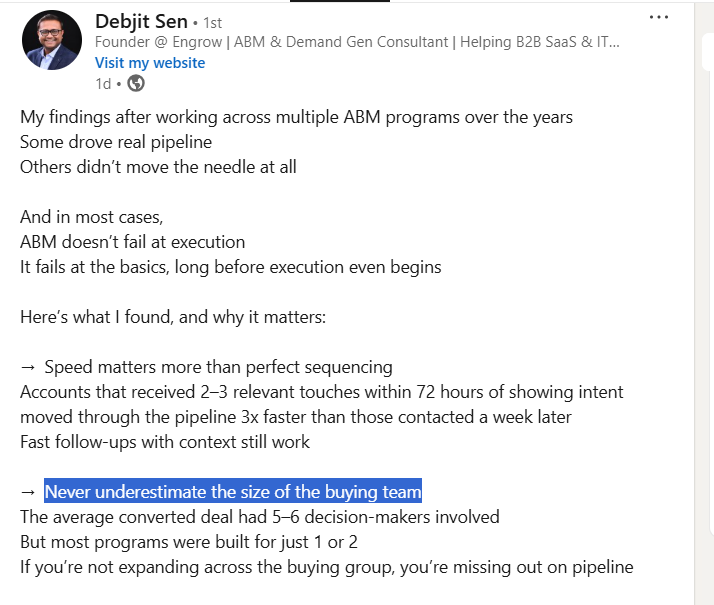
An ABM agency founder, Debjit Sen, notes that many programs target only one or two stakeholders.
In reality, the average buying team he encountered had about five to six people, and you should not underestimate DMU size:
Industry research shows DMUs with up to 11 members are no longer unusual.
Therefore, engaging one lead is not enough in ABM because B2B decisions are made by groups.
Track how many decision makers and influencers you have engaged inside each account. That metric is your Account Penetration Rate.
Example: If a target account has 10 relevant stakeholders and you have meaningfully engaged 5 of them, penetration equals 50 percent.
Here is how to improve the score:
Experts recommend deliberate multi-threading.
Map the roles involved, such as economic buyer, technical influencer, and user champion, and engage several contacts on purpose.
Tailor content by role, like business cases for executives and technical documentation for IT, and run account-level workshops or webinars to involve the full buying group. Reserve this level of effort for higher-value accounts.
This focus on every relevant person raises win odds and reduces single-thread risk.
ABM requires upfront investment even when ROI is strong later.
For example, a 2019 SiriusDecisions study pegged the average ABM program budget near 350,000 dollars excluding headcount, with expectations of growth.
Scaling adds risk if spending is not disciplined.
Teams often keep funding poor performers due to a sunk cost mindset.
Use this approach to budget intelligently and avoid hard lessons:
Shift dollars from broad, low-yield tactics to targeted ABM work.
If you buy big lists or run untargeted ads, repurpose that spend for personalized content or direct outreach to named accounts.
Start with a pilot and request a limited trial budget to demonstrate impact before expanding.
Align with Sales on shared investments like tools or data.
Brandon Redlinger advises positioning some spend, such as an ABM platform or data enrichment, as sales enablement rather than only marketing’s cost center.
This framing often speeds executive approval.
High performers redirect spend from generic programs to focused activities.
Roughly half of a typical ABM budget goes to program execution, with the rest to technology and people.
Winning programs raise investment in high-touch efforts like bespoke events or direct mail for target accounts and cut back on broad, unqualified lead gen.
The takeaway: place resources where they directly raise engagement in target accounts.
Free Resource: Try our free ABM budget calculator to estimate ad spend.

Smaller deals may open faster, but enterprise accounts take persistence.
Single-blast emails will not carry you.
Top sales development leaders on LinkedIn back sequences with 15 or more touches across channels to break through.
Outreach.io’s SDR leader, Sam Nelson, created the widely used “Agoge” sequence for priority accounts with 16 steps over 21 business days.
Becc Holland, CEO and Founder at Flip the Script, shared a related strategy in her LinkedIn post:

Make the first email your most personalized, and center it on pain, not personal trivia.
Replace the old MQL mindset with MQAs in ABM.
An MQA is a target account that crosses an engagement threshold and is ready for Sales.
Document clear criteria so BDRs do not overlook hot accounts.
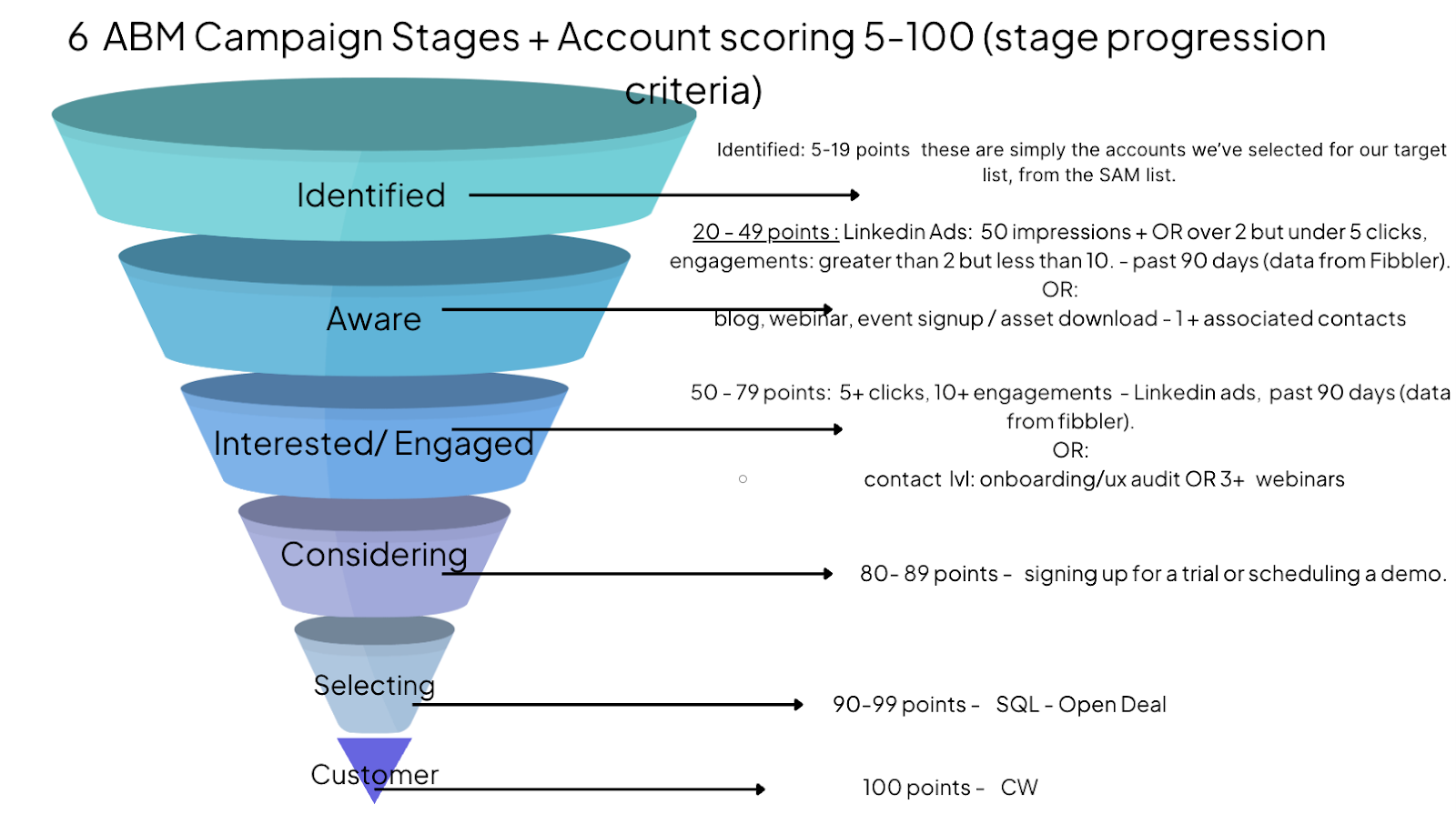
I like borrowing from GTM pro Kyle Poyar’s ABM stage model:

Example: The Userpilot team used these ABM stages, inspired by Kyle’s framework:
Their MQA corresponded to the “interested” stage, such as 5 or more ad clicks, 10 or more engagements, or 3 or more webinars and an onboarding or UX audit session.
As soon as an account reached that stage, it was assigned to a BDR for outreach.
Sales follow-up should be immediate, and messaging should reflect the prospect’s pain points and behavior.
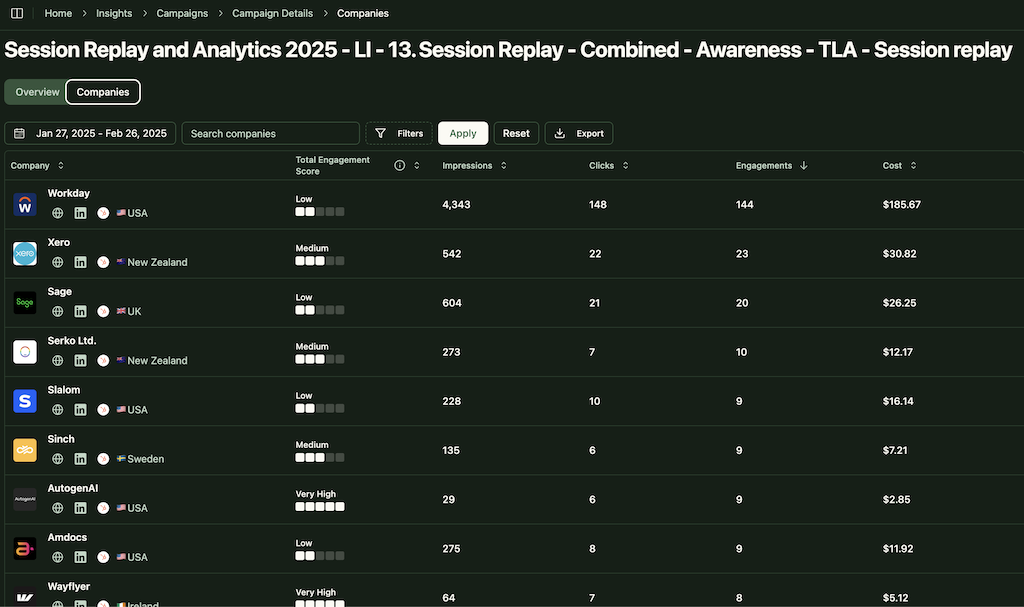
ZenABM helps here by pulling LinkedIn ad impressions, engagements, and clicks from the official API:
It then writes those engagement metrics as company properties in your CRM:
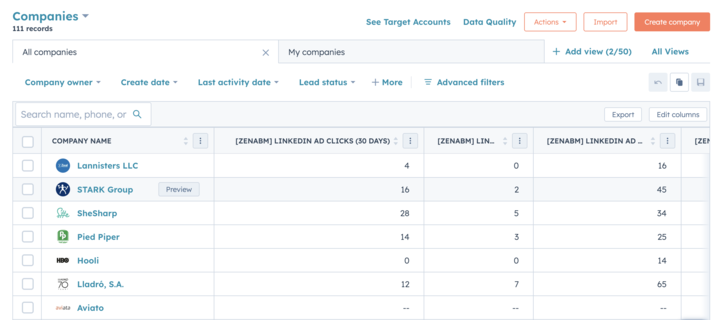
This gives Sales full visibility into each account’s ad activity right where they work.
ZenABM can also auto-assign a BDR when an account becomes “interested”:
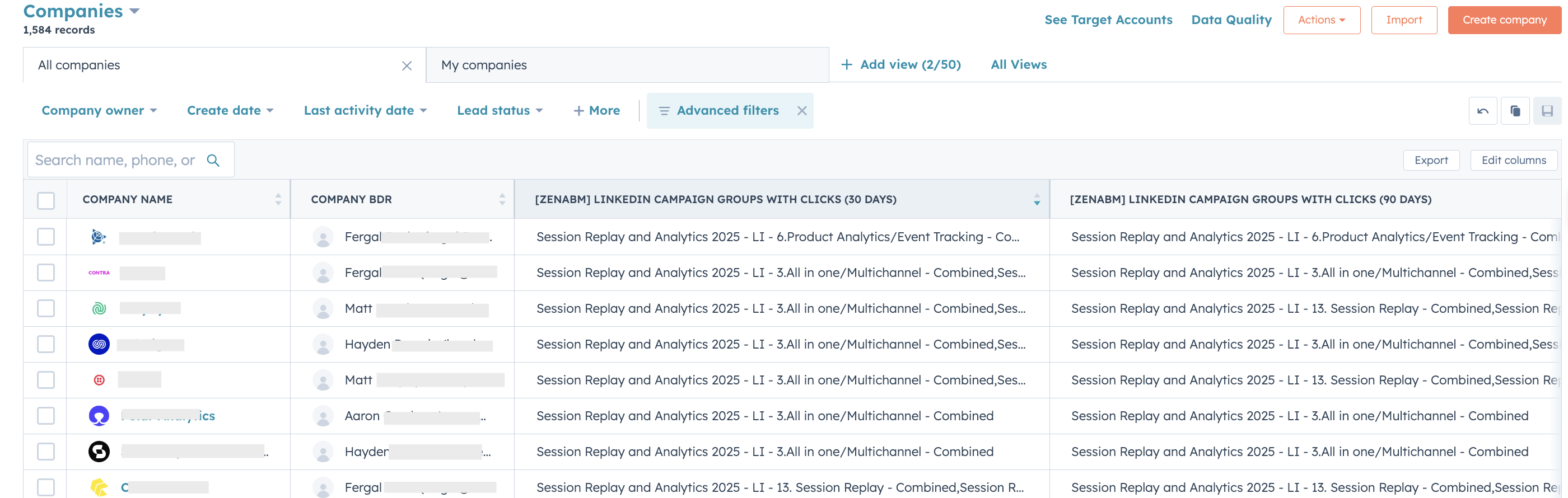
So, immediate outreach is covered.
For message relevance, tag each ad with its intent and let ZenABM analyze and push each company’s inferred interest into the CRM:
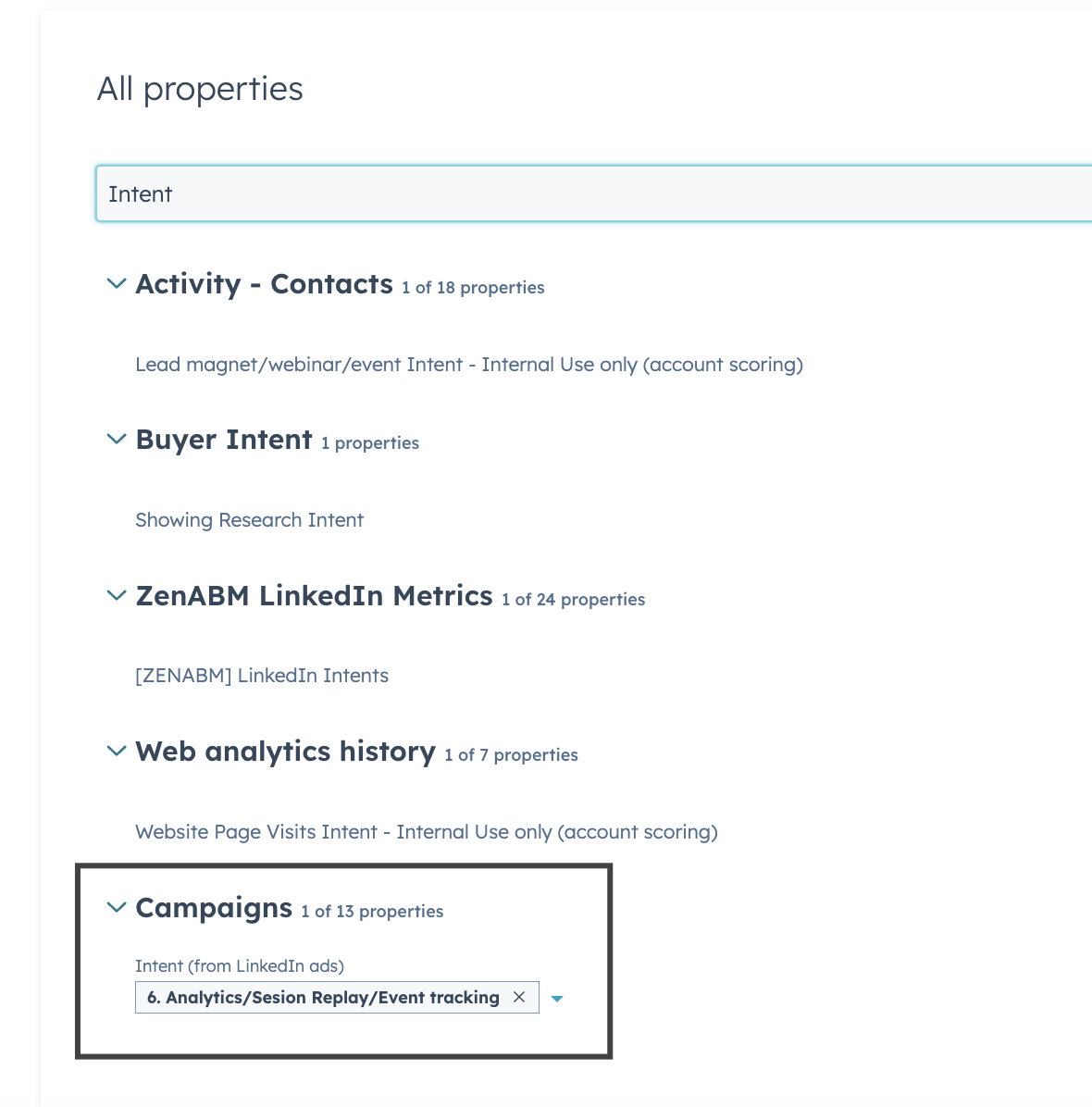
Your BDRs will know which accounts to contact and what to discuss.
Pro Tip: In addition to penetration KPIs, track
ABM ops are demanding, and poor data quality makes them harder.
Before personalization at scale, experienced teams scrub CRM and marketing automation data thoroughly.
Deduplicate records, standardize company names so contacts roll up correctly, enrich firmographics, validate key contacts, and block spam inquiries from the website.
Many teams run an ICP data audit first:
Deduplication and validation can run in cycles, while spam and bot submissions need constant filtering.
Here is Tarek Reda’s workflow for automated CRM cleaning:

This background workflow keeps you focused on ABM.
Disconnected tools will not deliver.
Integrate marketing automation, CRM, ad platforms, and ABM tools to build a unified account view. If you rely on intent data or LinkedIn Ads, feed those signals into scoring.
Do not rush to buy every ABM tool. Fix data and solidify strategy first.
Emilia Korczynska, VP of Marketing at Userpilot, spent months evaluating ABM tools. She heard advice that she didn’t need one. After discovery, demos, and POCs with Demandbase, Terminus, RollWorks, CommonRoom, N.Rich, and others, she realized the best fit for her strategy was not a heavyweight ABM suite.
Why?
Many vendors try to de-anonymize impressions and clicks from their own ad networks, which overlap heavily with Google’s Display Network. These tools often depend on reverse IP to identify visiting companies.
Accuracy is limited because only about 11 percent of companies register IPs:
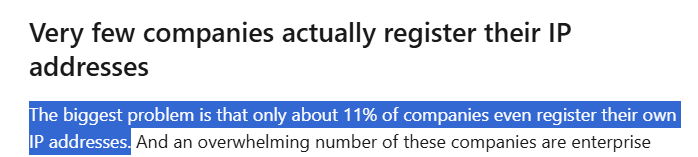
Remote work further obscures identity as people browse from unregistered networks.
Even the stronger tools cap out near 42 percent accuracy per a Syft study:
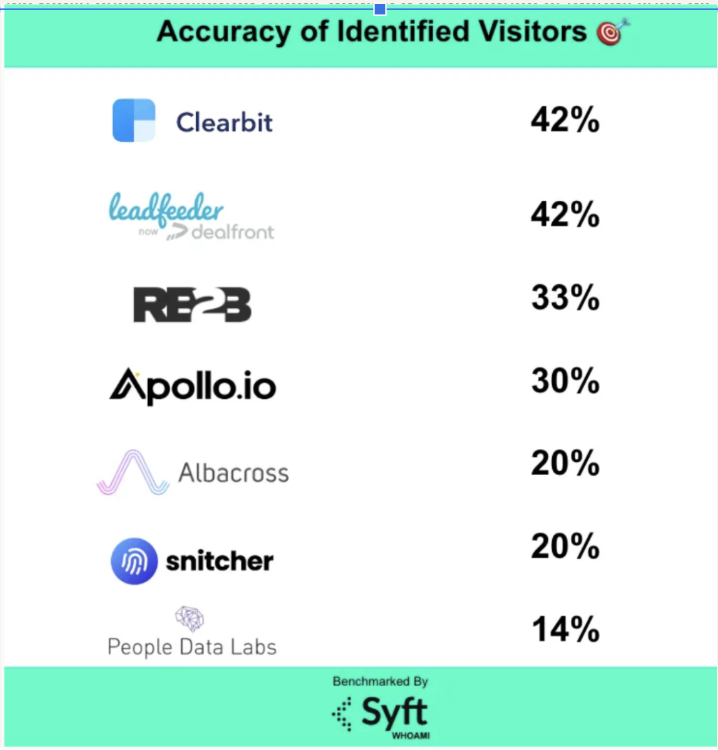
And display ecosystems suffer from bot fraud:

After poor results on display, Userpilot ran ABM with LinkedIn ads and their CRM. HubSpot Marketing was not essential once they stopped matched-audience campaigns. They still needed to pipe LinkedIn data and intents into the CRM with stages, which led them to build ZenABM:
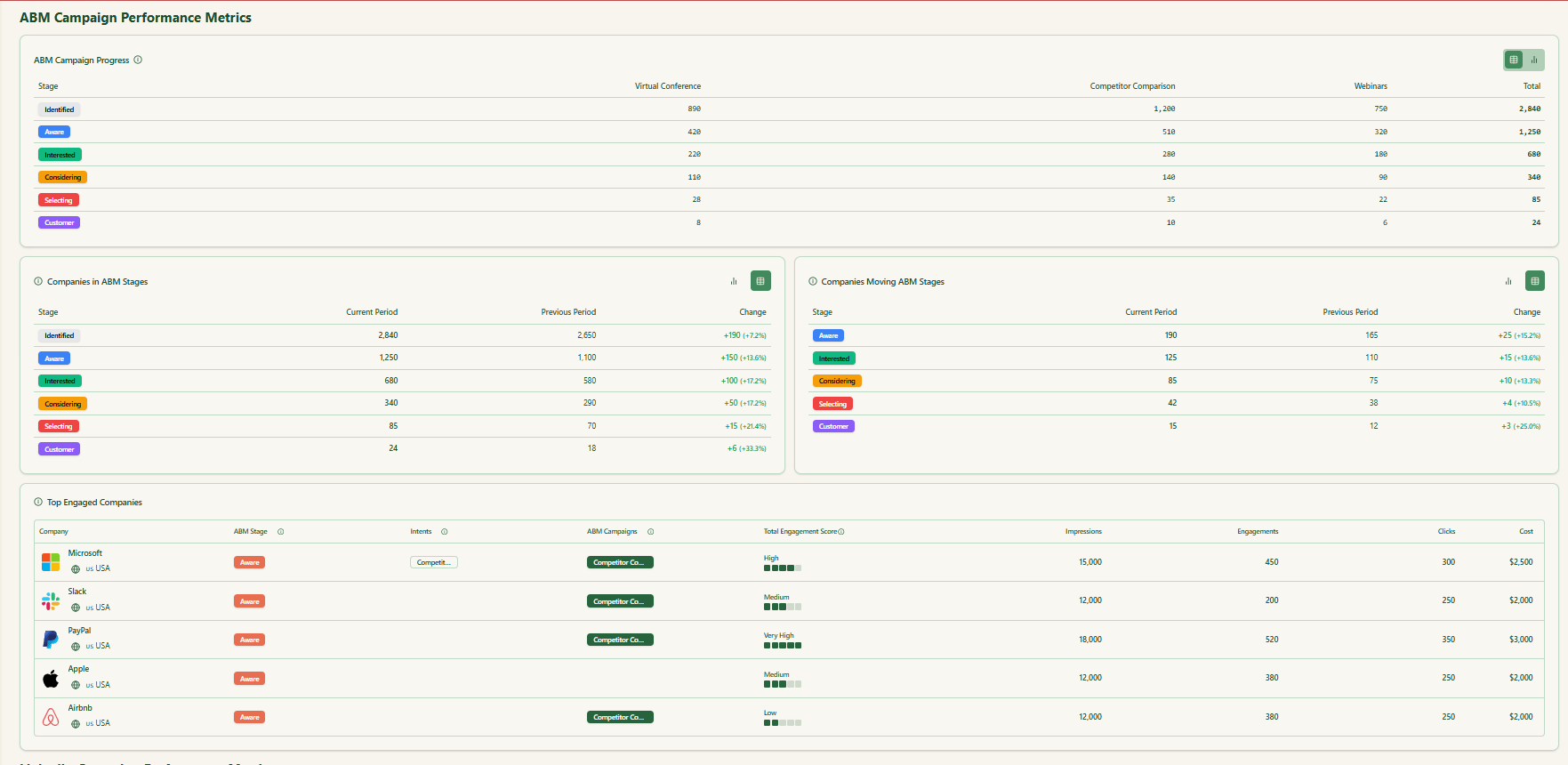
Yes, that is how ZenABM started.
The lesson remains: your tech must reflect your strategy and connect seamlessly.
ABM thought leader Brandon Redlinger sums it up well. Game plan and technology should support strategy, not stand in for it:

Traditional demand gen moves through a linear funnel. ABM inverts the model: 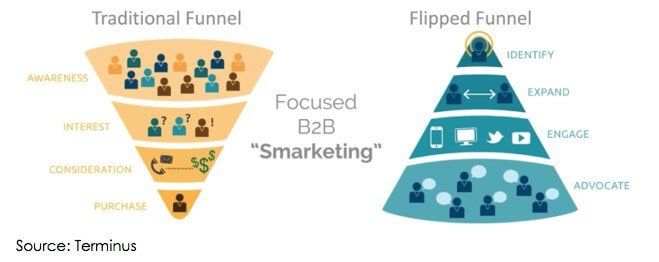
Instead of casting a wide net, ABM starts with a curated account list and aims to convert a larger share through tailored, orchestrated outreach.
Two ways to proceed:

Use Sangram Vajre’s FlipMyFunnel stages: Identify, Expand, Engage, Advocate.
First identify target accounts, then expand to reach key people, engage with tailored content across channels, and finally turn customers into advocates.
Another path is to stop forcing every account through assumed stages.
Emilia Korczynska explains why early-stage assumptions can be misleading:

Many teams assume the whole TAL is unaware and run only TOFU.
Reality differs. Some know your brand, some seek solutions, and some are comparing vendors.
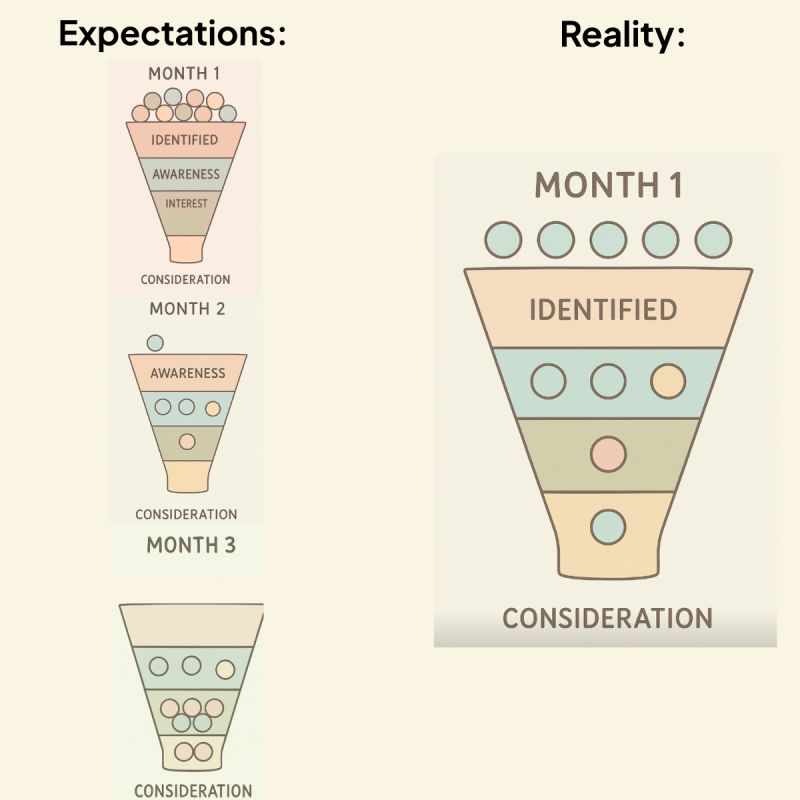
Serve content that educates on the problem, solution, and product at the same time so each account finds its path.
Seasoned practitioners execute in phases rather than moving too slowly forever or scaling prematurely.
This is the crawl, walk, run model:
Lay the groundwork:
Manually personalize a few one-to-one plays and build basic account dashboards. Learn, document, and configure tools, including MQA definitions.
Key focus: team alignment and data readiness
Expand to one-to-few or one-to-many.
Introduce account-level personalization such as content hubs, personalized ads, and multi-threaded emails per segment.
Operationalize plays for new targets, such as welcome kits and VIP invites, and coordinate Sales and Marketing via an ABM platform or regular joint sprints.
Scale while preserving relevance.
Support Sales with stronger insights, run programs by account tier, and add expansion and retention motions for customers.
Automation and AI help here. Use intent signals to trigger tasks when an account heats up.
Scalability is the aim: keep the high-touch feel without rewriting every asset. Build modular kits by industry to personalize efficiently.
Free Resource: As you reach run mode, asset sprawl grows. Use our ABM campaign and ad asset management templates to stay organized.
Experts treat each account like a small market and run ongoing reviews.
Do not set and forget. Inspect movement through the pipeline and the touches that influence progress.
Questions to ask:
This rigorous loop is what many leaders have in mind when they say ABM is “data-driven marketing on steroids.”
ZenABM is built for LinkedIn-based ABM and includes the following capabilities:
ZenABM ingests company-level ad engagements, including impressions, from LinkedIn’s official API:
You can review impressions, engagement, spend, CTR, and more by company.
ZenABM connects engaged companies to opportunities in your CRM to quantify impact on pipeline and revenue: 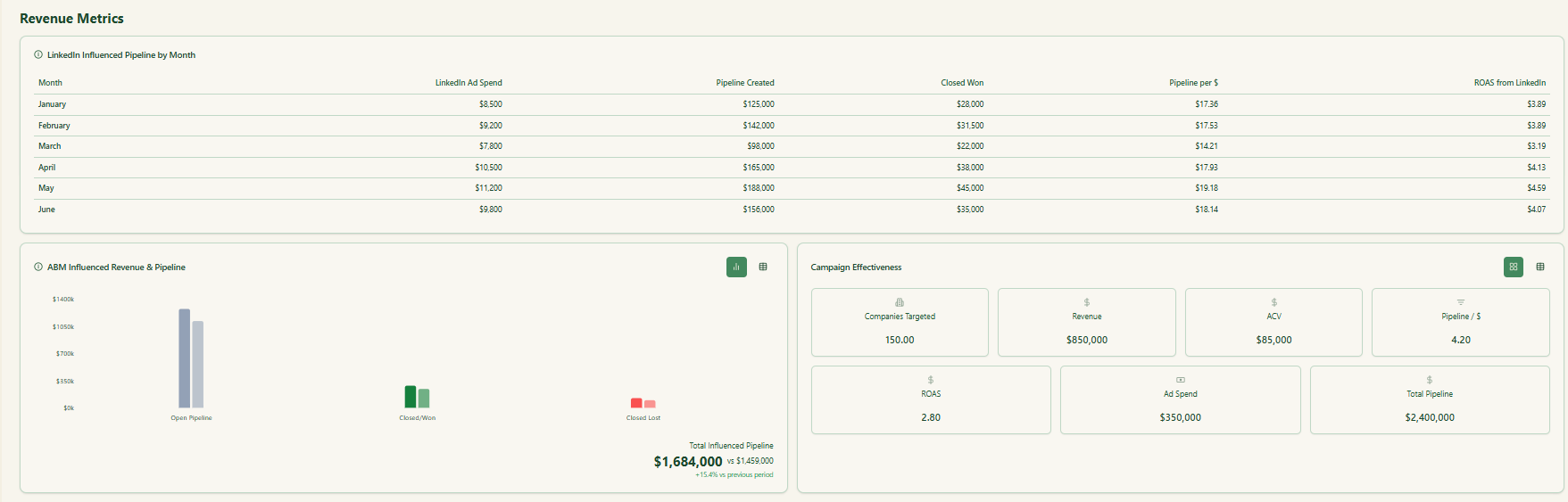
You can set your own minimum impressions to classify a deal as ad-influenced.
ZenABM calculates a current Engagement Score for each company based on recent touches. When a company crosses your threshold, ZenABM updates its ABM stage in your CRM and alerts Sales.
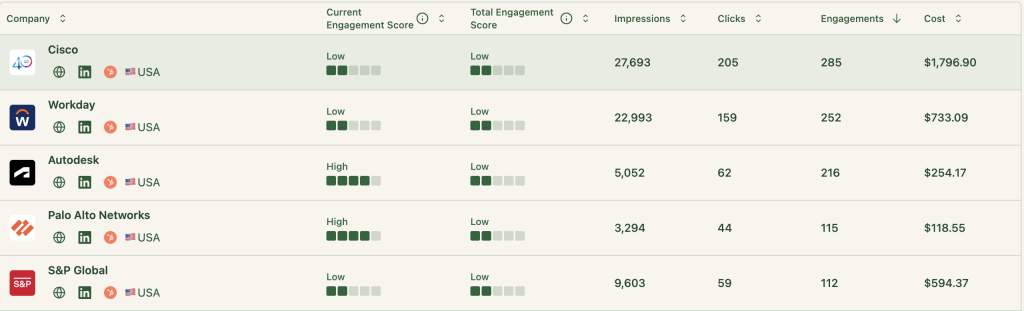
Identify hot accounts by engagement score and assign them automatically.
Running multiple use-case campaigns? ZenABM shows which companies engage with which themes so reps get a ready conversation starter: 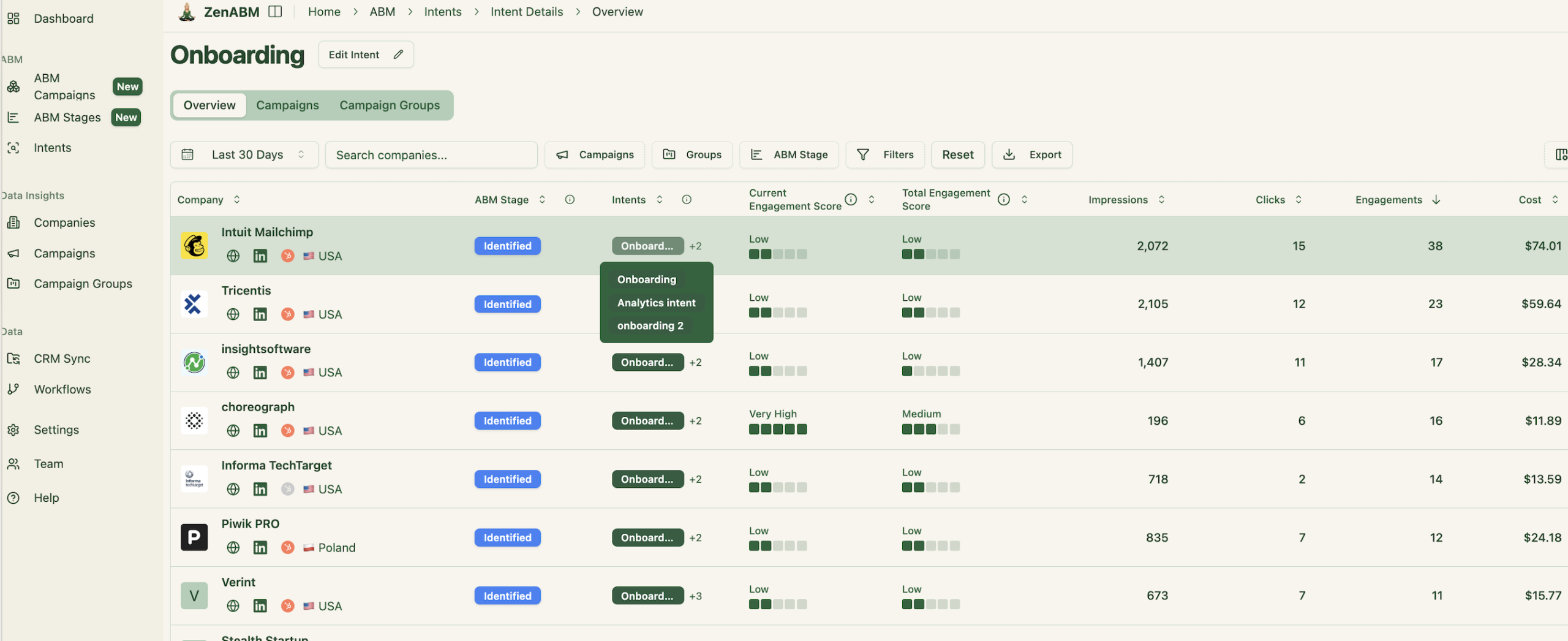
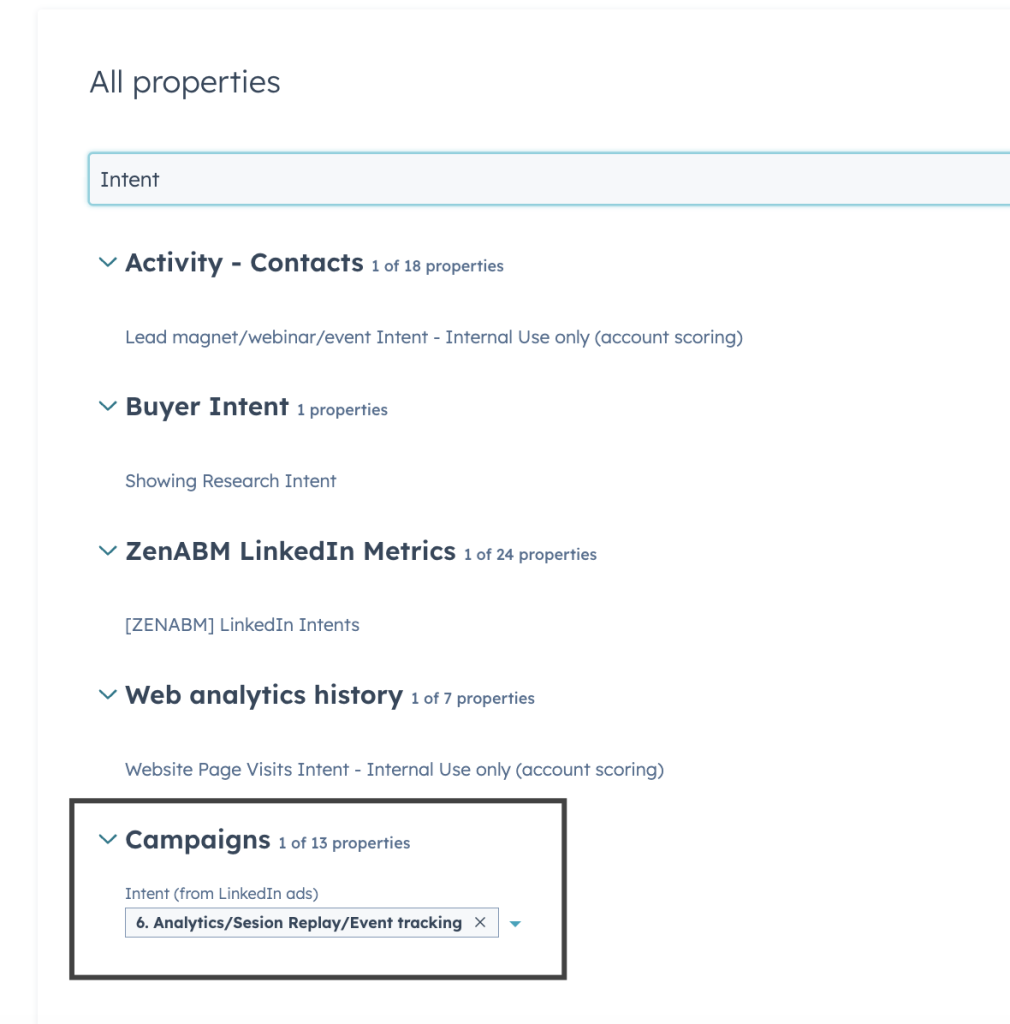
It also writes the intent as a company property in your CRM:
Stage tracking is available and thresholds are configurable: 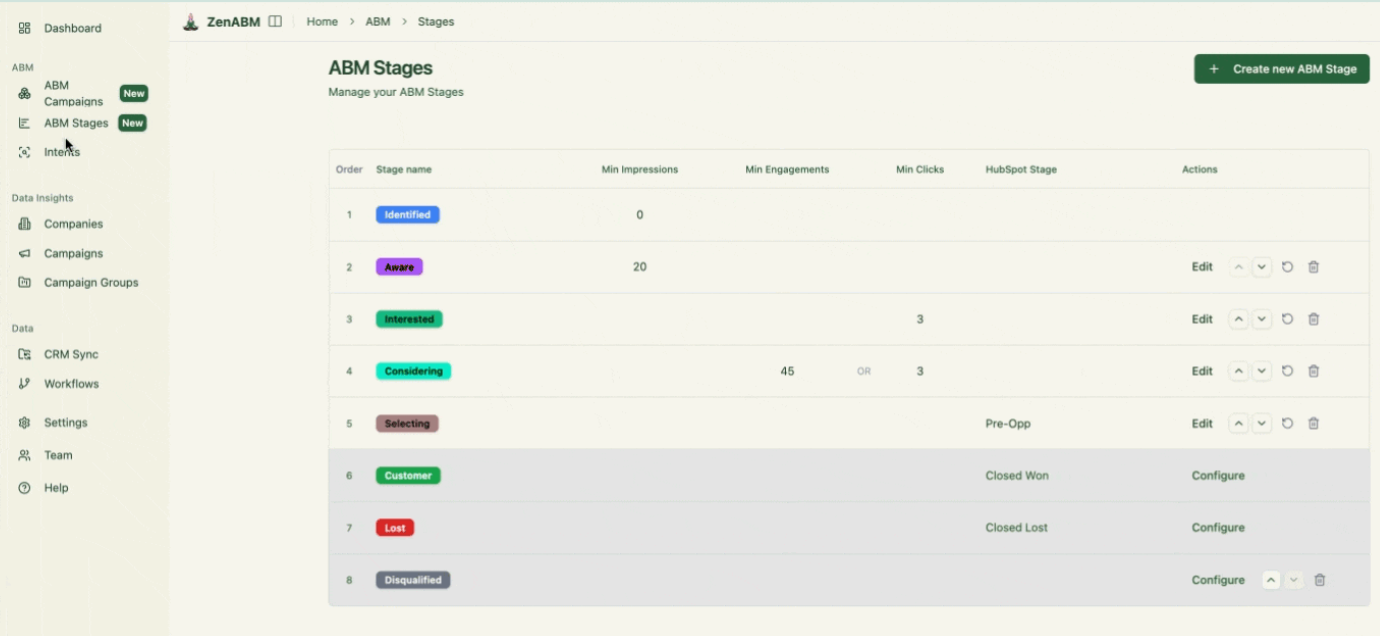
Export lists of companies that engaged with each campaign or use case in ZenABM, then retarget those accounts with aligned ads or personalized sequences.
I hope these ideas help you put top ABM tactics to work inside your program.
As shown above, ZenABM can operationalize these moves with first-party data and CRM sync so you do not rely on third-party guesswork.